Skip to content
When deciding how to straighten your teeth, two common options often come up: traditional braces and clear aligners. While both are effective, they work differently and suit different patient lifestyles. At Northshore Orthodontics, we provide both treatments and help you make the best decision based on your goals, age, and oral health needs.
What Are Traditional Braces?
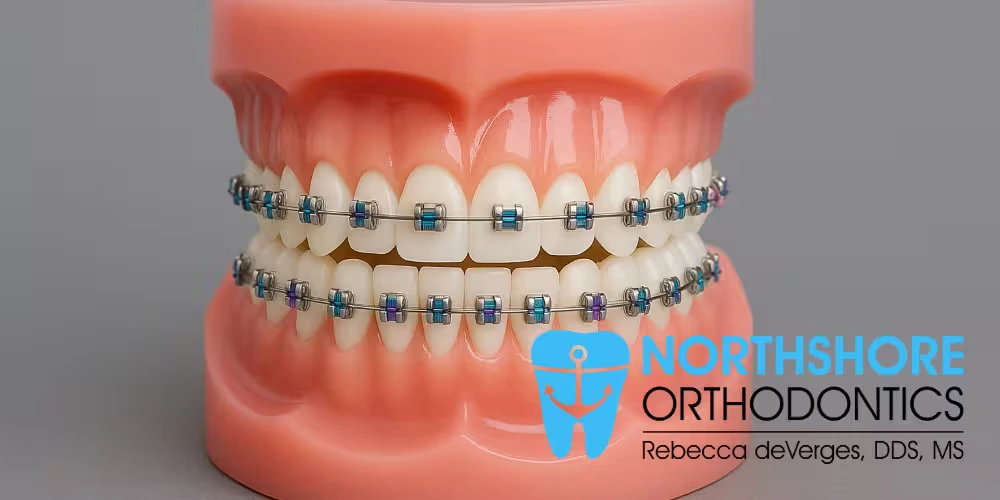
Traditional braces are metal brackets and wires affixed to your teeth and adjusted over time to move them into alignment. They remain one of the most effective treatments for a wide range of orthodontic issues, from crowded teeth to complex bite problems.
At our practice, we use modern metal braces that are smaller, more comfortable, and more efficient than in the past. You can read more about traditional braces and how they work on our blog.
What Are Clear Aligners?
Clear aligners, such as Invisalign®, are custom-made plastic trays that gradually shift your teeth without the use of brackets or wires. They are nearly invisible, removable, and preferred by many adults and teens for their flexibility and aesthetics.
Aligners must be worn 20–22 hours a day and changed every 1–2 weeks as teeth progress through each stage of alignment.
How to Decide Between Traditional Braces and Clear Aligners
Here’s how the two options compare based on common decision factors:
1. Effectiveness for Complex Cases
2. Visibility
3. Daily Maintenance
For hygiene tips during orthodontic care, see our guide on maintaining oral health with braces.
4. Treatment Time
What Does Treatment Look Like at Northshore Orthodontics?
At Northshore Orthodontics, we tailor every treatment plan to your individual needs. During your initial visit, Dr. Rebecca deVerges and our experienced team will evaluate your bite, alignment, and goals to determine whether traditional braces or clear aligners are right for you.
We use advanced technology to map out your smile transformation and explain each step of the journey. You can also explore modern orthodontic treatment options that combine precision with comfort.
About Our Clinic
Northshore Orthodontics is led by Dr. Rebecca deVerges, a board-certified orthodontist recognized for her skill and patient-focused care. Our Mandeville clinic is equipped with state-of-the-art tools to ensure precise results and a comfortable experience.
We offer both traditional braces and Invisalign®, along with a full range of orthodontic services for kids, teens, and adults. For a helpful breakdown of treatment types and lifestyle considerations, visit our blog on finding quality braces near you.
Flexible Financing Options
We understand that orthodontic care is an investment. That’s why we offer transparent pricing and flexible financing plans to suit your family’s needs. Our staff will guide you through insurance questions and help you find a plan that fits your budget.
Areas We Serve
Our Mandeville office welcomes patients from across the Northshore, including:
If you’re looking for traditional braces or Invisalign® near any of these areas, Northshore Orthodontics is here to help.